


H-14 MAIN HALYARD COMPTIP

H-14 MAIN HALYARD COMPTIP
- In stock, ready to ship
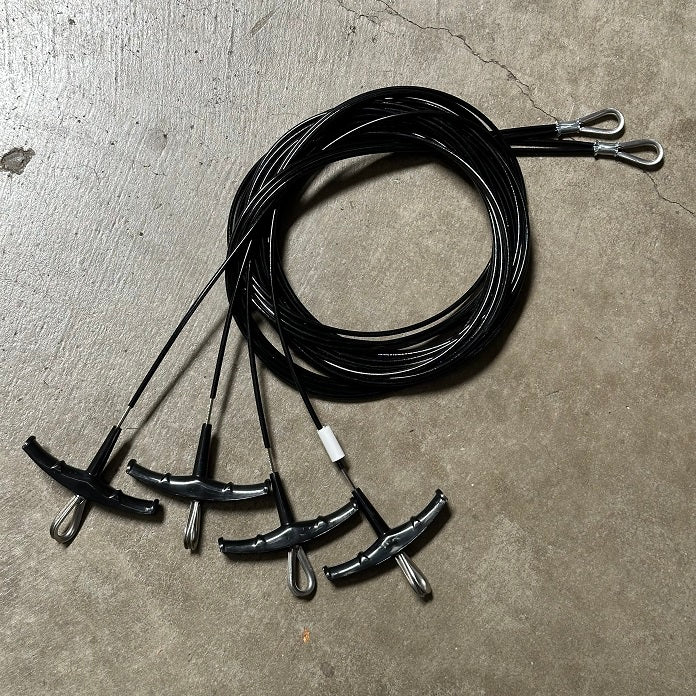
H14 Main Halyard Comptip
Murrays Part# 002-0173-60
H-14 main halyard for the Hobie 14 with a CompTip mast.
Built to factory-spec with stainless wire, a captured shackle pin, and a hydraulic swaged fittings to ensure optimum strength and fit. Equivalent to Hobie #10657001.
The H14 main halyard is used to raise the main sail on a Hobie 14.
Precision Replacement for Hobie 14 CompTip Masts
Built to exact factory specifications, the Murrays Hobie 14 Main Halyard - CompTip features marine-grade stainless steel wire and high-strength line. Engineered specifically for Hobie 14 catamarans equipped with a fiberglass CompTip mast head, this main halyard delivers reliable hoisting and secure locking.
-
Direct Replacement For: Hobie Cat® Part #10657001
-
Includes: Halyard shackle with integrated captured pin (prevents accidental loss over water)
-
Swaging Quality: Hydraulically swaged at over 10,000 lbs force to prevent work-hardening and maximize wire lifespan.
Comptip Vs Non-Comptip Masts:
The comptip was added to Hobie masts in the early 90's to prevent electric shock if the masts contacts electrical wires. The Comptip is a fiberglass upper section on the mast that is about 10 feet long. Comptip masts can be identified by a seam that seperates the lower aluminum section and the upper fiberglass section on the mast just above the tang that the forestay and shrouds attach to. Comptip masts also feature a mast head with 2 pulleys that are roughly 2" in diameter vs the non comptip mast head that only has one larger 8' pulley. The full aluminum non comp tip mast also uses a wire halyard with a separate rope portion and can be found linked below.
Instalation:
Feed the rope end down the mast. It goes through the mast head, down the length of the mast and out the base of the mast. If the old halyard is still in place it can be used to pull the new halyard through the mast. You can cut the wire portion off of the old halyard and use some tape to secure the rope end of the new halyard to the top end of the old halyard and then use the old halyard to pull the new halyard through the mast.